9F. Jewish Activists Resisting Racism and Extremism in the Pacific Northwest
Evidence key
Verified core
Supported by an institutional biography, archival collection, federal judicial history, museum record, or other identified source.
Partially verified
A broader event or role is documented, but the supplied narrative adds details not established by the sources reviewed.
Claim / research lead
Preserved for archival follow-up. It should not be presented as established fact until primary or independently corroborated evidence is located.
Contradicted detail
A date or factual detail conflicts with a stronger documented source and is corrected in the publication text.
Regional visual overview
1. Judge Gus J. Solomon - Oregon

Verified historical core
Gus J. Solomon was a Portland-born Jewish lawyer and civil libertarian who became a federal district judge in 1949. The Federal Judicial Center documents his appointment by President Harry S. Truman and his long service on the District of Oregon bench. The Oregon Encyclopedia describes him as a Jewish activist, civil libertarian, and advocate for minority rights. It also documents his work for Japanese Americans returning from wartime incarceration and his later efforts to open Portland law firms and social clubs to Jews.
Solomon's oral history at the Oregon Jewish Museum records his view that people were entitled to rights regardless of race, religion, or economic status; it also records an unofficial employment effort for young Jewish lawyers, women, and African Americans and his statement that he helped obtain legislation repealing Oregon's alien-land laws.
Sources: Federal Judicial Center; Oregon Encyclopedia; Oregon Jewish Museum oral history.
Claims still requiring corroboration
The supplied report additionally attributes to Solomon direct Vanport emergency-housing litigation after the 1948 flood, co-founding the Portland Urban League, a particular "radical Zionist subversive" confirmation campaign, specific physical threats, repeated courtroom or office bomb threats, and particular confrontations with elite Portland clubs. The sources reviewed for this publication support Solomon's broader civil-rights and anti-discrimination record but do not establish all of those details.
Status: preserve as research leads until court-security records, Marshals Service files, newspapers, correspondence, Urban League archives, or other primary documentation is located.
2. Rabbi Raphael Levine - Washington

Verified historical core
HistoryLink documents Rabbi Raphael Levine's long leadership at Temple de Hirsch and his work building communication among religious, racial, and civic communities. When Dr. Martin Luther King Jr.'s scheduled 1961 Seattle appearance lost its original church venue, Levine offered Temple de Hirsch. He helped draft a 1963 open-housing ordinance, invited African American leaders to discuss civil-rights goals, opened the temple to a freedom school during the 1966 school boycott, and helped raise money for voluntary school busing.
Levine and Father William Treacy developed Camp Brotherhood. The documented chronology places the Green Valley Farm purchase in 1966, construction planning in 1968, and dedication by Governor Dan Evans in September 1968.
Claims still requiring corroboration
The source report's claims that Levine compiled employment-discrimination dossiers for the 1949 Washington law, personally infiltrated hostile homeowner-association meetings, faced organized arson threats at Camp Brotherhood, hired private security, or acted as a "human shield" during street unrest were not established in the principal biography reviewed here.
Contradicted detail: the supplied 1954 Camp Brotherhood date is replaced in the verified narrative by the 1966-1968 chronology documented by HistoryLink.
3. Governor Julius L. Meier - Oregon
Verified historical core
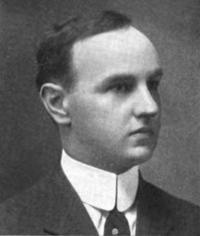
Julius L. Meier served as Oregon governor from 1931 to 1935. The Oregon Encyclopedia documents his Jewish communal leadership, his support for the Columbia River Highway, and his advocacy of public power and Depression-era reforms. It also specifically documents that his prominence and Jewish religion made him a target of the Portland Ku Klux Klan, which called for a boycott of Meier & Frank. The boycott failed.
The same source documents his independent 1930 gubernatorial campaign and his large electoral victory. Oregon's broader Klan history is independently well documented: organizers recruited in Portland, Eugene, Salem, Astoria, Hood River, Pendleton, and elsewhere, and the organization became a major political force during the early 1920s.
Sources: Oregon Encyclopedia - Julius L. Meier; Oregon Encyclopedia - Ku Klux Klan.
Claims still requiring corroboration
The supplied narrative goes substantially beyond the verified Meier biography by alleging a systematic purge of Klan-linked officials, repeated vetoes of hidden nativist legislation, racially equalized relief programs implemented against corrupt local boards, anti-Semitic effigies, armed mobs, assassination threats, and cross burnings near the state capitol specifically intended to intimidate Meier.
Status: these remain claims requiring gubernatorial papers, state-police records, legislative records, newspapers, photographs, or other contemporaneous evidence.
4. Rabbi Ariel Stone - Oregon

Verified historical core
Congregation Shir Tikvah identifies Ariel Stone as its founding spiritual leader from 2003 and as the first female rabbi to head an Oregon congregation. The congregation records her 2018 City of Portland Human Rights Award for Lifetime Achievement and lists her as convener of Portland Interfaith Clergy Resistance. It also directs readers to material on her street activism for justice.
The Oregon Jewish Museum's Good Trouble exhibition documents Jewish participation in Portland social-justice movements and specifically captions a 2017 photograph as "Rabbi Ariel Stone at Anti-Trump Rally, Pioneer Courthouse Square, Portland 2017."
Sources: Congregation Shir Tikvah; OJMCHE - Good Trouble.
Claims still requiring corroboration
The supplied narrative additionally says that Stone mapped the financial backing of white-supremacist networks, forced developers to adopt affordable-housing quotas, received particular coordinated death threats, endured specified weapons or crowd-control effects in 2020, and directly confronted named Proud Boys or Patriot Prayer members. Those detailed assertions were not established by the institutional sources reviewed for this edition.
Status: retain as research leads pending public statements, police or court records, organizational files, contemporaneous reporting, or synagogue records.
5. Historical context: exclusion and resistance in Oregon and Washington
The people profiled here operated in a region where discrimination was embedded in both institutions and social life. The Oregon Encyclopedia describes 1920s Klan organizing as explicitly white-supremacist, anti-Catholic, anti-immigrant, and rooted in "100 percent Americanism"; recruiters worked in Hood River as well as other Oregon communities. Seattle's civil-rights history likewise includes racially restrictive covenants and prolonged resistance to open housing. This background helps explain the importance of Jewish participation in broader coalitions for civil liberties, housing equality, minority rights, and interfaith work.
6. Verification matrix for the supplied report
| Supplied assertion | Status after review | Publication treatment |
|---|---|---|
| Solomon was a Jewish civil-liberties advocate and federal judge. | Verified core | Publish as established history. |
| Solomon helped Japanese Americans returning from incarceration and helped repeal Oregon alien-land restrictions. | Verified / substantially supported | Publish with institutional citations. |
| Solomon co-founded the Portland Urban League and led Vanport emergency-housing litigation. | Not established in sources reviewed | Research lead only. |
| Repeated bomb threats targeted Solomon because of civil-rights rulings. | Unverified | Research lead only. |
| Levine supported open housing, school integration, interfaith work, and Camp Brotherhood. | Verified core | Publish as established history. |
| Camp Brotherhood was founded in 1954. | Contradicted detail | Correct to documented 1966-1968 development chronology. |
| Arson threats/private security surrounded Camp Brotherhood construction. | Unverified | Research lead only. |
| The Portland Klan targeted Julius Meier and called for a boycott of Meier & Frank. | Verified | Publish as established history. |
| Meier purged Klan officials from state agencies and faced specific assassination plots/capitol cross burnings. | Unverified | Research lead only. |
| Ariel Stone founded/led Shir Tikvah and has a documented public social-justice role. | Verified core | Publish with Shir Tikvah/OJMCHE citations. |
| Stone mapped extremist finances, forced housing quotas, or directly confronted named armed groups as described. | Unverified in reviewed sources | Research lead only. |
7. Preserved source facsimiles - embedded images
The six images below are direct renders of the user-supplied source PDF. They are embedded inside this HTML as data URIs: there are no remotely hosted image dependencies in this section. The facsimiles preserve the exact supplied narrative, including claims that the verified-core text above qualifies or corrects.

Source report - page 1
Embedded facsimile of the supplied PDF page.
Source report - page 2
Embedded facsimile of the supplied PDF page.
Source report - page 3
Embedded facsimile of the supplied PDF page.
Source report - page 4
Embedded facsimile of the supplied PDF page.
Source report - page 5
Embedded facsimile of the supplied PDF page.
Source report - page 6
Embedded facsimile of the supplied PDF page.8. Claims requiring additional historical investigation
The source report expressly preserves the following categories as research leads rather than established findings: repeated bomb threats involving Judge Solomon; specific assassination threats or cross burnings intended to intimidate Governor Meier; hostile homeowner-association infiltration, arson threats, private security, and human-shield claims involving Rabbi Levine; and claims that Rabbi Stone mapped extremist finances, compelled housing quotas, received specific coordinated death threats, or directly confronted named armed groups. Any similar incident involving threats, surveillance, harassment, infiltration, arson, militia activity, or financial investigation should remain labeled as a claim until corroborated.
9. Recommended primary-source verification
- National Archives and Records Administration.
- FBI records obtained through FOIA.
- United States Marshals Service and federal court-security records.
- Oregon State Archives and Washington State Archives.
- Federal and state court records.
- Contemporary newspapers and historical periodicals.
- University manuscript and special collections.
- Personal correspondence, diaries, gubernatorial papers, and organizational records.
- Oral histories and institutional archives.
- Civil-rights, synagogue, interfaith-coalition, and community-group records.
10. Sources and bibliography
- Federal Judicial Center - Gus Jerome Solomon.
- The Oregon Encyclopedia - Gus J. Solomon.
- Oregon Jewish Museum and Center for Holocaust Education - Gus Solomon oral history.
- HistoryLink - Rabbi Raphael Harry Levine.
- The Oregon Encyclopedia - Julius L. Meier.
- The Oregon Encyclopedia - Ku Klux Klan in Oregon.
- Congregation Shir Tikvah - clergy and staff.
- Oregon Jewish Museum - Good Trouble.
- Urban League of Portland - institutional history.
Verification date: August 13, 2026. This section distinguishes evidence located in the cited sources from material preserved solely because it appeared in the supplied report. Absence of corroboration in this review is not proof that an event never occurred; it means the event should not yet be stated as established history.